Beyond the Mock Exam Panic: A Practical Recovery Guide
When the Mock Result Feels Like a Failure
The email notification pops up on your screen or the physical paper hits the desk, and your heart sinks. You spent weeks on these topics, yet the grade staring back at you suggests otherwise. It is a sharp, visceral disappointment that ripples through the household. Students feel the weight of their future expectations shifting, while parents often struggle to hide their own anxiety about college affordability and admissions requirements, as highlighted in recent reports on rising educational costs and university pressure.
It is tempting to label this 'failure,' but in the context of high-stakes international curricula, a mock exam is simply a diagnostic. It is not an indictment of your intelligence; it is a map of your current gaps. Whether you are prepping for the HKDSE, IGCSE, or IB, the mock is the last safe space to make mistakes. The goal right now isn't to wallow in the score, but to use the data to perform a post-mortem on your current revision process.
Why the Pressure is Mounting for Students Today
The global education landscape is currently experiencing a period of intense scrutiny. From concerns over student loan transparency in the UK to the competitive nature of admissions processes in the US, the stakes feel higher than ever. When students see news about the changing definitions of academic eligibility or the ongoing debates regarding school funding and support, it is natural to feel that one bad set of mock results could derail their entire trajectory.
This external noise makes it harder to focus on the work at hand. You are reading headlines about everything from protest movements to the complexities of school sustainability, and it’s easy for your brain to conflate these macro-level uncertainties with your own personal performance. However, your mock result is a localized issue. It is a technical problem that requires a technical solution, not a reason to re-evaluate your worth or your future potential.
Actionable Steps to Deconstruct Your Exam Performance
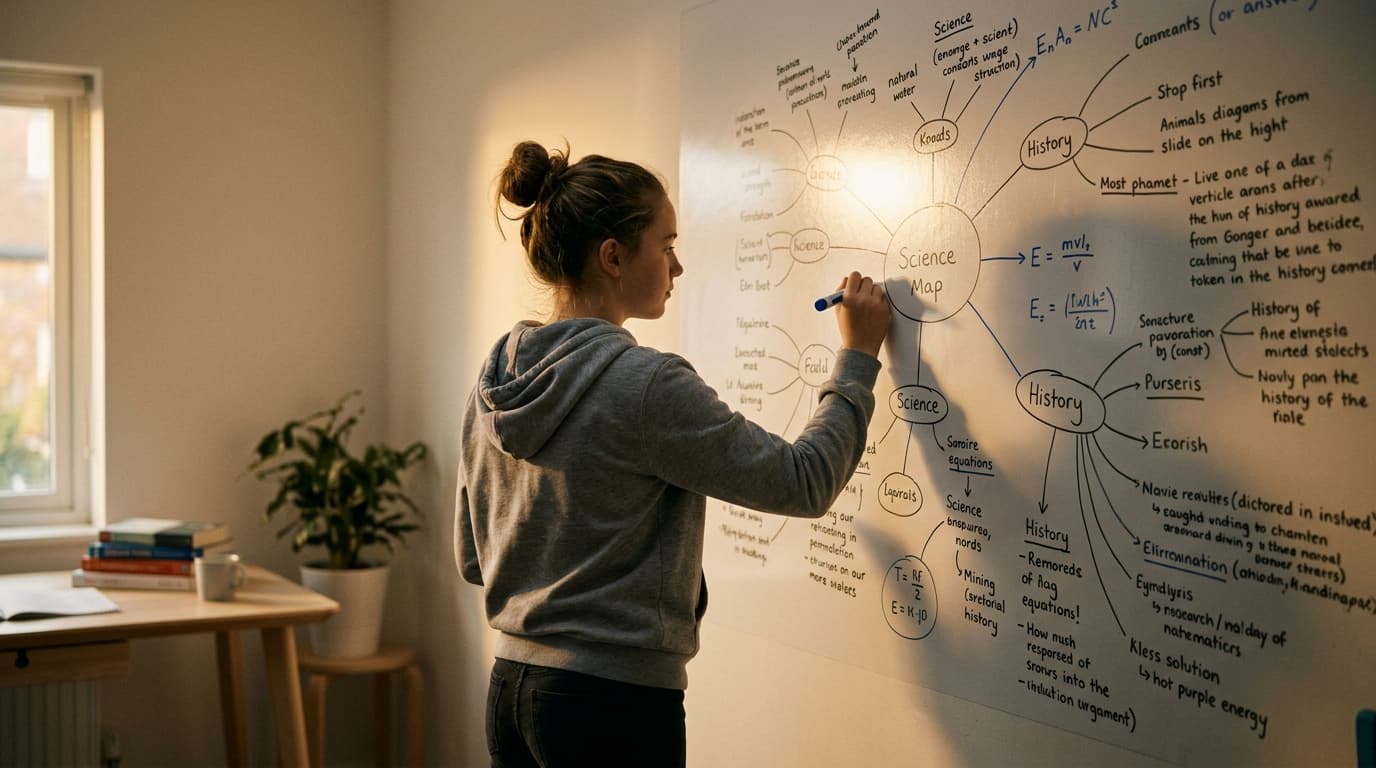
If you want to move forward, stop looking at the grade and start looking at the mark scheme. Most students glance at their score, sigh, and toss the paper aside. Instead, you need to conduct a 'gap analysis.' Take your Paper 2 or your biology long-answer section and map every error to a specific cause: was it a lack of content knowledge, or was it a failure to structure your response to earn the marks? If it was content, go back to your textbook. If it was structure, you need to practice exam-technique drills.
This week, dedicate one hour to what I call 'the audit.' Print a fresh copy of the paper you struggled with. Do not look at your previous answers. Try the questions again under timed conditions, keeping the mark scheme open next to you. You are looking for the 'why' behind the lost points. Were you rushing? Did you misinterpret the command verb? Mastering these tiny mechanical adjustments is how you add 5 to 10 percent to your actual exam result without necessarily learning new material.
Supporting Your Student Without Adding to the Chaos
Parents, your role after a bad mock result is to be the calm regulator. Your student is likely already drowning in their own self-criticism. If you come in with 'I told you to study more' or 'What happened here?', you are only adding to the emotional load. Instead, treat the exam paper like a business report. Ask questions that shift the focus from their identity to the task: 'What did you find most surprising about the marking criteria?' or 'Do you need help finding a tutor or a specific resource to break down that mechanics section?'
It is also crucial to monitor the 'input' in the house during this period. We are living in a time where the national discourse on education is fragmented—from debates over school suspensions to the push for a 'National Decade of Reading'—and this can lead to distraction. Help your child protect their focus by ensuring their physical environment is stable. If you notice they are spiraling due to screen time or general fatigue, encourage a reset rather than a lecture. A short, planned break is often more productive than another hour of forced, low-quality revision.
Common Myths That Hinder Student Recovery
One of the most dangerous myths is that you can 'cram' your way out of a bad mock. Many students believe they can just double their hours—pulling all-nighters or skipping meals—to fix their results. This is rarely effective and often leads to the kind of burnout that drags down performance during the final examinations. Quantity of study is not the same as quality of study. You do not need to work harder; you need to work more specifically.
Another myth is that if you failed a mock, you are 'not a math person' or 'not good at science.' This fixed-mindset trap is destructive. Even students who struggle in dual-enrollment courses often go on to be successful; failure in a specific exam is a snapshot, not a permanent label. If you are struggling with a subject, it usually means your current method of intake—whether it is reading notes or watching videos—is not aligned with the way the examiner wants you to output that information. Change your method, not your belief in your capability.
Turning Data Into a Roadmap for Success
The most effective way to recover is to replace the ambiguity of 'I need to study more' with the precision of 'I need to master these five specific topics.' Tools like Revui allow you to pinpoint those exact knowledge gaps, turning your mock result into a clear, prioritized checklist so you can stop guessing and start improving.