Exam Season Without The Micromanagement Stress
The Silent Tension Of The Revision Calendar
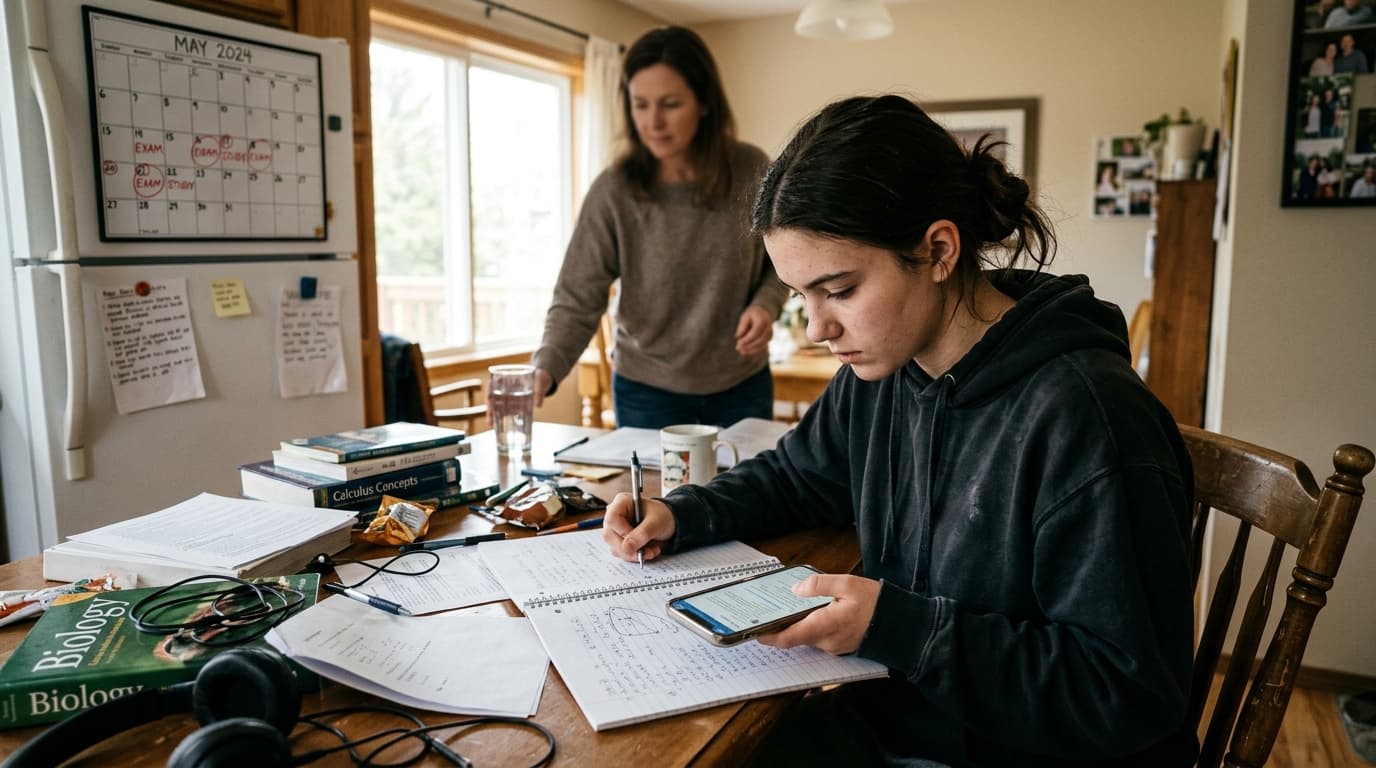
It starts quietly. A door stays closed a little longer than usual, a dinner conversation is cut short by a physics problem, or a phone is suddenly buried at the bottom of a backpack. As we move through August, the atmosphere in households with students preparing for IGCSE, A-Levels, or the IB shifts. It is a period defined by quiet anxiety, where parents often feel the urge to intervene, check, and double-check, while students feel the heavy weight of expectations.
This dynamic isn't helped by the noise from the outside world. We see headlines about students in India protesting exam leaks, debates over academic requirements in the UK, and even concerns about the role of social media in student performance. It is easy for parents to absorb this global anxiety and mirror it back into the home, turning a necessary study period into a high-stakes standoff.
Why Your Presence Matters More Than Your Policing
The most common mistake parents make is confusing 'support' with 'management.' When you start tracking the exact number of hours spent on chemistry or asking if they have finished their past papers every two hours, you aren't helping them learn; you are teaching them to manage your stress instead of their own. Research consistently suggests that excessive digital distractions can hinder progress, yet the solution isn't to become a security guard for their devices.
Instead, focus on being the logistical partner. Students are often overwhelmed by the sheer volume of material, not the act of studying itself. If your child is struggling, ask them if they have a clear plan for the next three days rather than asking if they have started. Helping them clear the kitchen table, ensuring they have healthy food, or simply acknowledging that the pressure is real does more for their mental health than hovering over their laptop screen.
Shifting The Focus To Active Recall And Agency
For students, the trap is 'passive revision'—reading notes over and over again until you feel like you know them. It is a comfortable lie. To actually prepare for an exam, you need to be wrong. You need to attempt a Paper 2 mechanics question, fail to get the answer, and then figure out exactly where the chain of logic broke. If you aren't feeling that flicker of frustration, you probably aren't studying hard enough.
Take ownership of your gaps. If you are preparing for your exams, use your study sessions to test your knowledge gaps rather than reviewing what you already understand. Whether you are aiming for top marks in the HKDSE or clearing university entrance requirements, the goal is to build a mental map that can withstand the pressure of the exam hall, not just memorize a textbook page.
Debunking The Myth Of The Perfect Study Routine
There is a pervasive myth that there is one secret, perfect way to revise—a magical routine that high-scoring students use. We see this in the misinformation that plagues college admissions cycles, where myths about 'the right profile' or 'the right extracurriculars' circulate despite evidence to the contrary. Stop looking for the perfect study hack and focus on the messy, iterative process of doing the work.
Another trap is the belief that more time equals better results. Many students burn out because they treat revision as a 12-hour endurance test. Real progress happens in focused bursts. If you find yourself staring at a page for twenty minutes without processing anything, stand up, walk away, and come back. It is far better to have two hours of high-intensity, effective output than eight hours of staring at a screen while your brain is elsewhere.
Building Resilience For The Long Term
Exam season is a test of character as much as it is a test of content. In an era where universities are adjusting their support systems and schools are navigating complex technological shifts, the ability to self-regulate is a superpower. By moving away from micromanagement, parents allow their children to develop that essential grit.
If you are looking for a way to support this process, platforms like Revui provide the structured, active practice that helps students identify their weaknesses without the need for constant parental check-ins. It gives them the data to understand their own progress, letting them take the lead on their revision journey while keeping the household dynamic calm and supportive.