Exam Season Without the Power Struggle: A Parent’s Survival Guide
The Dinner Table Tension Is Not Just Your Imagination
It starts subtly. You ask, 'How did the Chemistry paper 2 practice go?' and your student replies with a grunt that could mean anything from 'I finished it' to 'I am having a mental breakdown.' If you feel like the air is thick lately, you are not alone. Between the global anxiety of environmental headlines and the constant pressure of upcoming results, the domestic environment often becomes a mirror of the exam hall.
We are seeing a trend where schools are increasingly under fire, from the UK’s Ofsted inspection debates to concerns over screen time and student welfare. When the institutions themselves are in flux, students look to the home for stability. If you are feeling that extra layer of tension, it is likely because the students feel the weight of these systemic shifts, even if they cannot articulate them.
Why Your Student’s Screen Time Is A Battleground
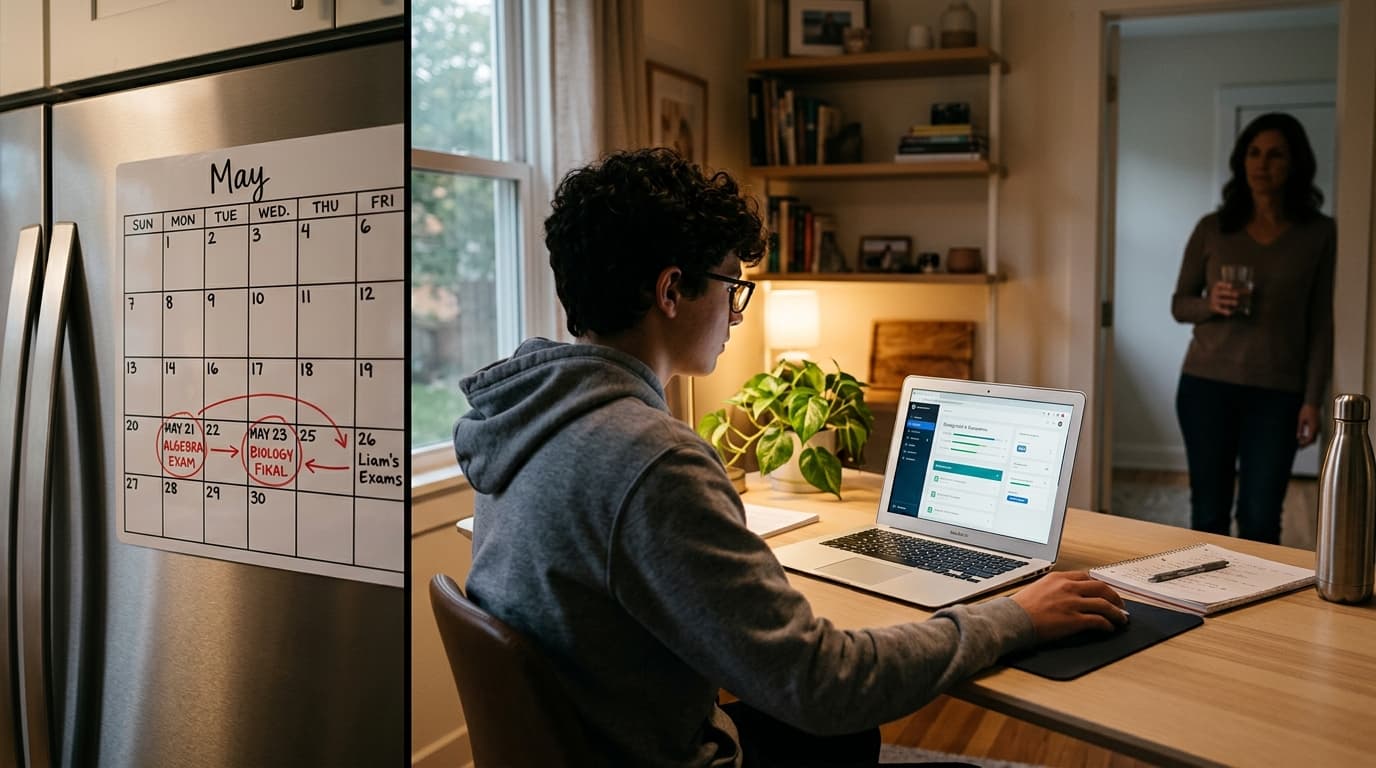
Clinicians are currently raising valid alarms about the impact of excessive screen time on long-term health, specifically short-sightedness. As a parent, it is tempting to use this as leverage to banish phones during revision hours. However, the reality is that for a student preparing for an IGCSE or A-Level, their digital world is their primary resource hub. When you demand they get off the screen, you might inadvertently be cutting off their access to the very tools they need to succeed.
Instead of policing the device, focus on the output. Ask them to show you the specific topic they are tackling rather than asking how long they have been 'on the computer.' If they are using a platform like Revui to generate targeted practice questions, that screen time is productive. If they are scrolling through social media, that is where the conversation needs to happen. The goal is to move from monitoring their time to monitoring their progress.
The Art of Being a 'Consultant' Rather Than a Manager
The most effective parents during exam season act like consultants. A manager tells their team what to do, how to do it, and when to do it. A consultant waits to be asked for help. When you step into a 'manager' role, you trigger the natural teenage instinct to push back. You become the obstacle rather than the ally.
Try a weekly 'check-in' that lasts ten minutes. Ask three simple questions: What is the most difficult topic you tackled this week? Where do you feel you wasted the most time? What can I do to help, or should I just stay out of the way? Sometimes, the most helpful thing you can do is bring a snack, leave the door slightly ajar, and trust them to manage their own schedule. It is a terrifying exercise in letting go, but it is the only way to build their self-efficacy.
Avoiding the 'Productive Procrastination' Trap
One of the biggest myths in study culture is that 'working hard' looks like highlighting notes for three hours or rewriting textbook chapters in neat handwriting. We call this productive procrastination. It feels like work, but it rarely results in higher scores. If your student is spending all their time making their revision notes look beautiful, they are avoiding the discomfort of actual retrieval practice.
Help them identify the difference between 'reviewing' and 'testing.' Reviewing is passive; testing—like sitting down to complete a timed set of past papers or using adaptive AI tools—is active. If they are struggling with a specific module, encourage them to find the one area where they consistently lose marks. Fixing that one area is worth more than reading a chapter five times.
Keeping Your Own Calm In A Stormy World
It is hard to remain the 'calm harbor' when the news cycle is filled with reports on educational reform, school budget protests, or even international tensions affecting our regions. You are rightfully worried about their future, but your anxiety is contagious. If you are constantly refreshing school portals or stressing over university funding reports, your student will pick up on that panic.
Your role is to be the steady presence that puts these exams into perspective. They are significant, yes, but they do not define the entirety of their future. By keeping your own stress in check, you provide the space they need to think clearly. Tools like Revui exist to take the guesswork out of the process, providing a structured, data-driven way to approach revision that removes the emotional volatility from the equation.
Further reading
- Cut screen time in classrooms to avoid long-term health issues, clinicians urge — BBC Education
- Report About FSA’s Future Causes Concern — Inside Higher Ed
- Ofsted faces fresh calls to halt graded school inspections in England — BBC Education
- ‘We’re not playing games’: Parents launch playground protests to fight school field sell-off — The Guardian Education